Big Ideas, Real Impact.

Reflections from CINGS on the ideas shaping our work

CINGS x Serica CEO Dinner Series: Ganesh V. Iyer

12th March 2026

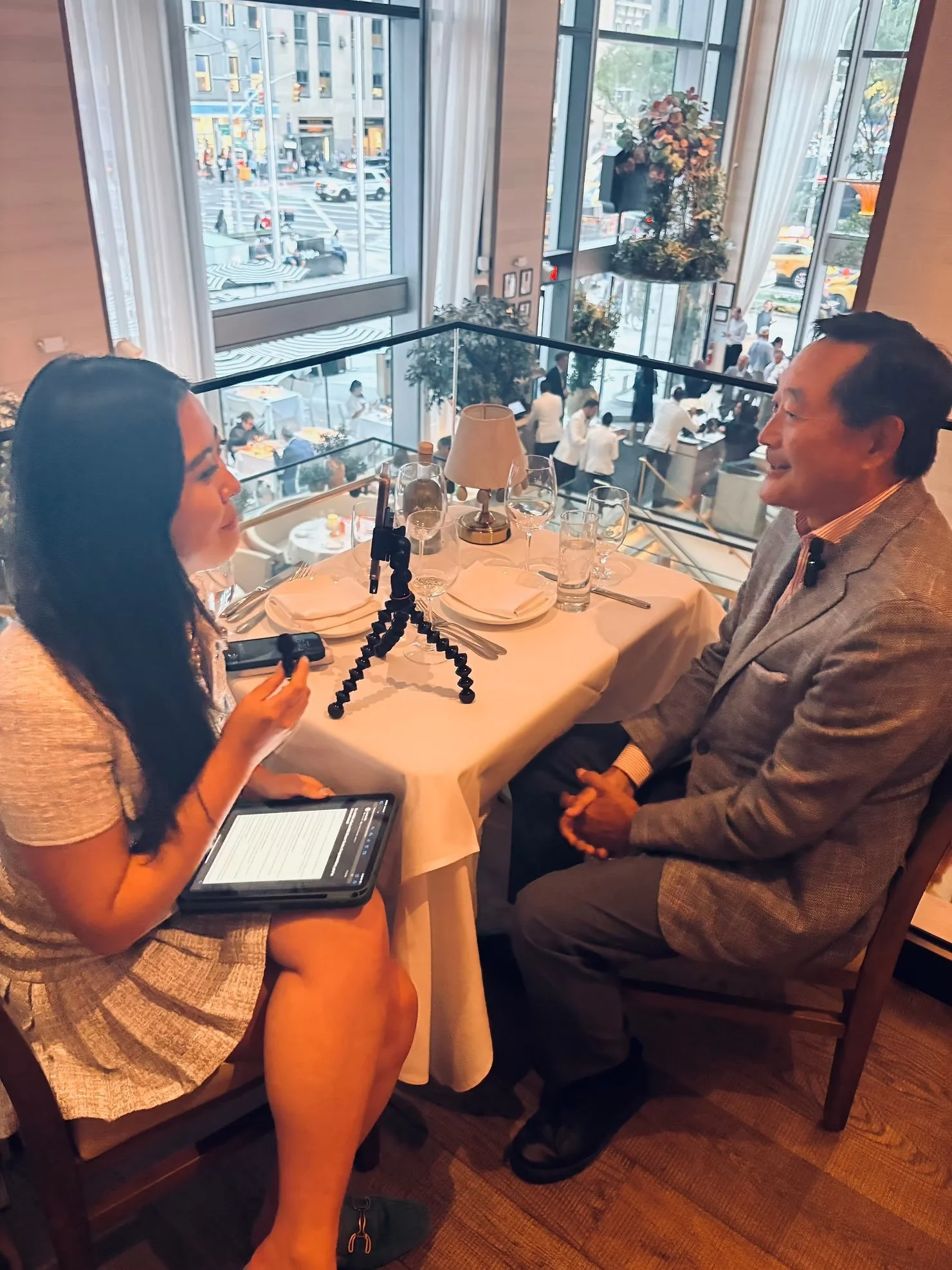
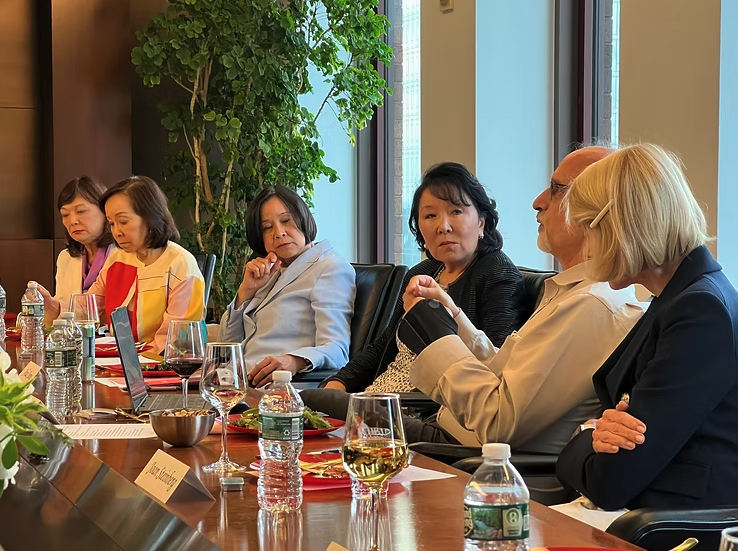
The Serica Initiative recently hosted another installment of its CEO Dinner Series, welcoming Ganesh V. Iyer, U.S. CEO of NIO.

CINGS (China Institute Next Gen x Serica) had the chance to interview Ganesh and to speak about the future of the autonomous economy.

The conversation began with a simple observation: Tesla proved the category could exist. That early push created the conditions for the global EV market we see today—millions of electric vehicles now on the road worldwide. Yet adoption has unfolded differently across regions.

Over the past five years, EVs have moved from an emerging category to a meaningful share of vehicles on the road, especially in China.

Ganesh also emphasized something that Western audiences often underestimate: the pace and scale of China’s innovation and execution in the EV space. He encouraged people to visit China to witness the change firsthand, noting that the speed of development is difficult to fully appreciate from afar.

From there, the conversation shifts to what comes next. Autonomous Economy. In some ways, Ganesh argues, the autonomous economy is already here, but it has the potential to become an even bigger part of our lives. Once driving is no longer the core activity, the role of the car changes.

EVs as the foundation, and Nio is spearheading the shift to a more autonomous economy, and the best is yet to come.

For the video interview, please visit https://www.sericainitiative.org/post/the-future-of-ev-with-nio-ceo-ganesh-iyer

CINGS New Asian Filmmakers Collective Screening & Talk

13th April 2026

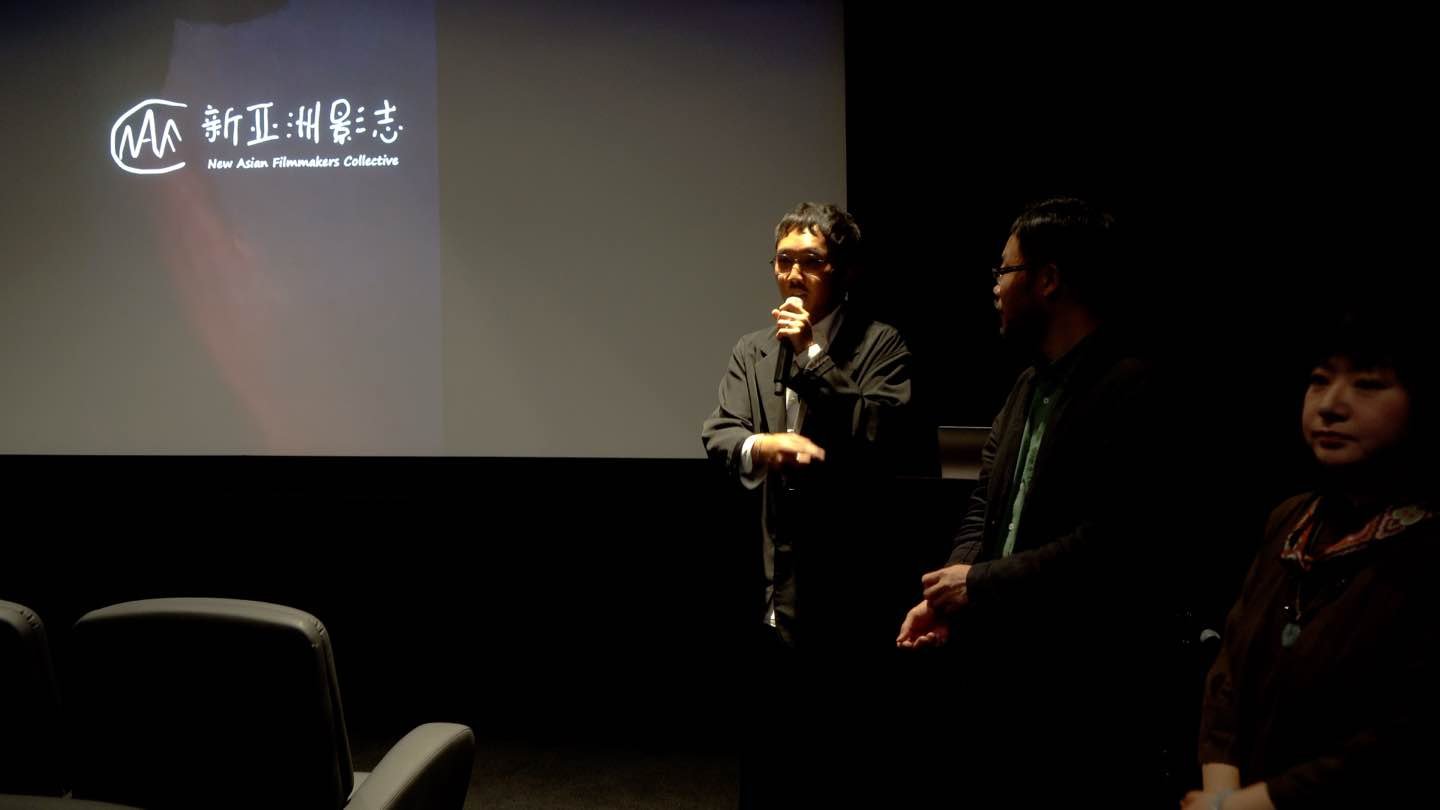
On April 13, we hosted “Evolution: From DV to AI Filmmaking” in collaboration with the New Asian Filmmakers Collective (NAFC), co-presented with CINGS.

The program followed the screening of Panda at New Directors/New Films (MoMA and Lincoln Center) and featured a conversation with Xiaodong Guo (NAFC founder & producer) and Mina Chen (co-founder & director), moderated by Chamberlain (CINGS).

The event opened with a reception and a screening of When Spring Comes, a short documentary directed by Mina Chen and Su Qing. We then introduced NAFC’s mission to support emerging Asian filmmakers.

The program continued with the avant-premiere of To Reach the End of the World, an AI-generated film directed by Joseph Lee, with AI direction by Nick Chen. The screening prompted discussion around the evolving role of AI in cinema. The film is scheduled for presentation at the Beijing Film Festival 2026.

A panel discussion concluded the afternoon, exploring the evolution of filmmaking from DV to AI and future possibilities.

We were encouraged by the strong turnout and the engagement from both current and prospective CINGS members.

This event reflects an ongoing commitment to fostering collaboration and expanding the future of Chinese independent filmmaking.

Impact Without Borders: Notes from the 2026 CINGS Annual Summit

2nd May 2026

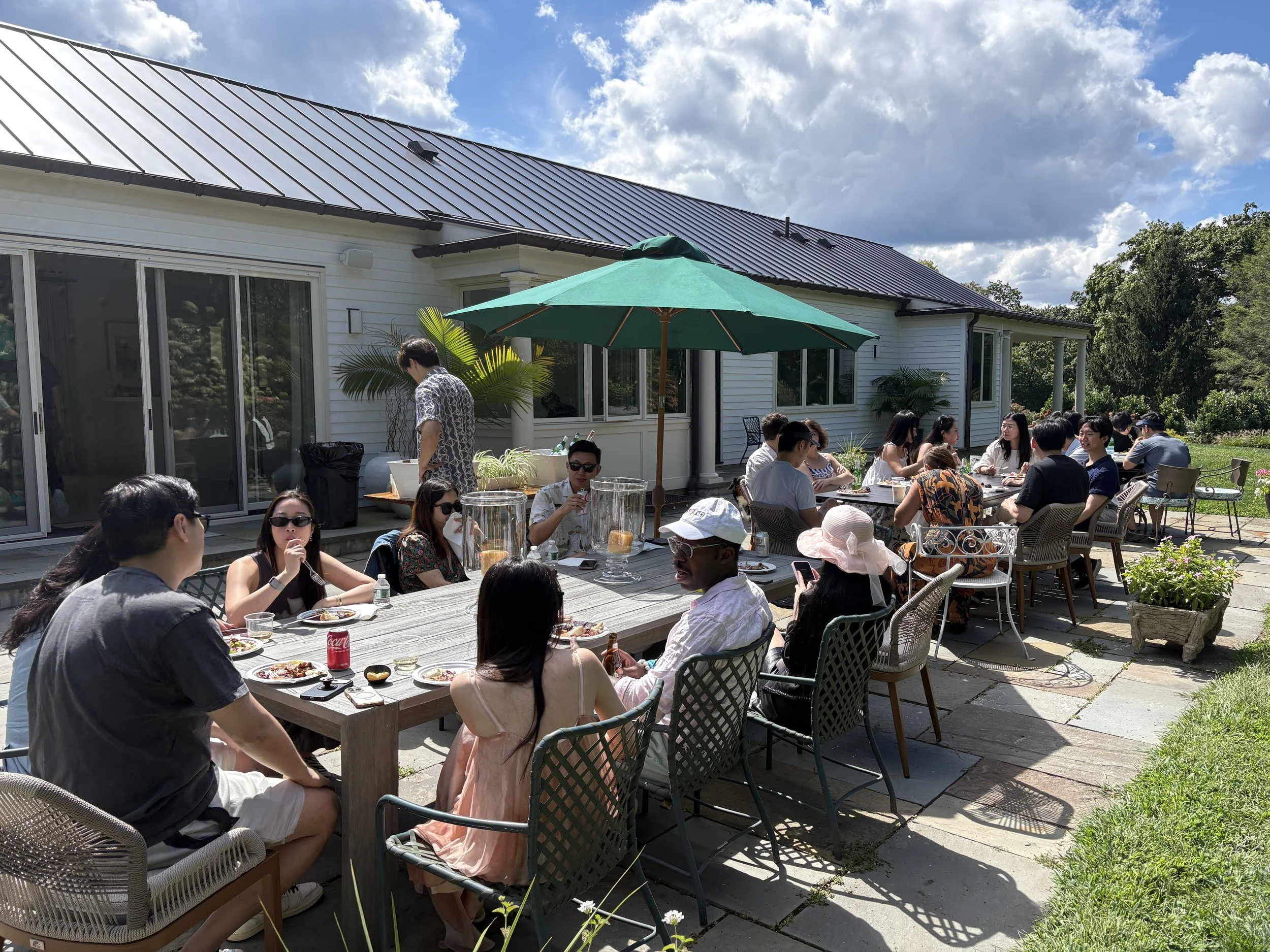
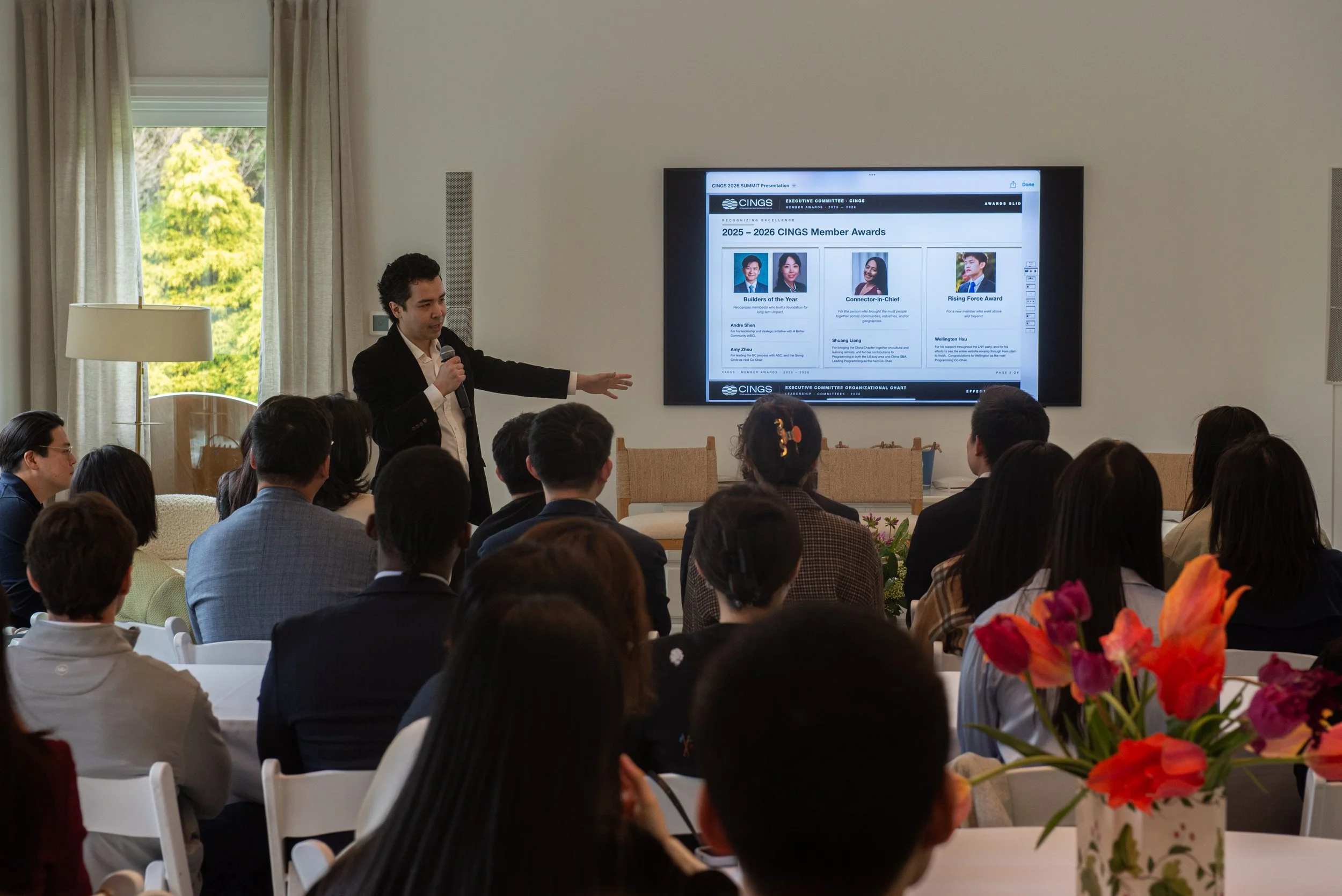
53 CINGS members, including 20 new members of the 2026 cohort, recently gathered in Connecticut for our CINGS 2026 Annual Summit. It was our largest turnout to date. But the number that mattered more was how many conversations kept going long after the formal sessions ended, spilling into coffee-fueled group chats that stayed abuzz well into late-night KTV.

The summit's theme was Impact Without Borders: Fostering U.S.-China Partnerships for Progress. Across four sessions covering AI policy, cross-border business and media, healthcare investment, and the preservation of cultural heritage, one question kept resurfacing: how do we read each other accurately, build trust, and drive impact when the dominant narrative on both sides rewards enmity?
Samm Sacks, Senior Fellow at Yale Law School's Paul Tsai China Center, opened the day with an insightful reframing of the U.S.-China AI relationship. The session was thoughtfully moderated by CINGS' Shuang Liang and Angelo Saraceno

The dominant frame around U.S.-China AI is a contest for technological dominance with national security as the stakes. Samm added the nuance that this is one layer of a far more integrated reality, and the deeper layer offers shimmers of hope. Scholars, engineers, civil society researchers, and ordinary citizens in both countries are working through the same questions about how AI should be governed, deployed, and trusted.

The conventional Western view treats China's AI governance as primarily an instrument of state control. Samm offered a more granular and technical read. On data privacy, algorithmic accountability, and the emerging frontier of agentic AI — systems that act autonomously on a user's behalf — China is moving quickly with pragmatic, iterative approaches across the public and private sectors.

The policy trajectory in both capitals is pushing the two ecosystems further apart. Export controls, outbound investment screening, and a Chinese retaliatory framework are all hardening the wall. The technical questions, meanwhile, pull researchers in both countries toward the same problems: how to make AI safe, protect user data, and keep agentic systems aligned with human intent.

The call is for targeted collaborations. Not a return to an overly interdependent era of a decade ago, but a deliberate identification of seams that geopolitics has not yet captured: AI safety for future generations, environmental impact, ethical standards for autonomous systems, and more. Areas where the cost of decoupling is high and strategic sensitivity is, for now, low. The window to act on them is narrowing; civil society and communities like CINGS have a role in maintaining the discourse and paving paths toward actions. "

Session Two: Reading the Signals, with Ivy Yang, Rosa Zhang, David Weeks, and Muyi Xiao

The second session, moderated by CINGS' Ivy Yang , was a working diagnosis of what cross-border business, culture, and media actually look like in 2026.

Rosa Qi Zhang, founder of Queue Agency, made the case that politics is a tax on Chinese companies entering the U.S. market, but not a verdict. Her clients, many from Shenzhen, Hangzhou, and other manufacturing and tech hubs, are growing well in the U.S. despite the headwinds. The reason is unglamorous: a relentless product-first orientation. The companies that win are the ones whose product quality is so high that the political conversation becomes secondary. She invoked the Chinese phrase 危中有机 — "within danger, there is opportunity" — as operational discipline rather than platitude. Constraints force better products, and good products win consumers.

David Weeks , co-founder and COO of Sunrise International, traced a structural shift in how Chinese B2B founders approach global expansion. A growing share is now international-first: they build for overseas markets from day one rather than treating global expansion as a phase-two question. The pull is partly the prestige of U.S. capital and U.S. media — a quote in TechCrunch or a top-tier U.S. investor on the cap table still opens doors elsewhere in the world. The push is the saturation of the Chinese domestic market: thin margins, brutal competition, and for many B2B companies, a path to profitability that runs through somewhere else. David also flagged a recurring expectations gap on the marketing side: Chinese companies might be international-first, but they still see PR through a local lens. B2B clients are accustomed to short-term transactional relationships with journalists rather than building organic relationships over time. Much of the work is recalibrating what a Western PR strategy is actually for: thought leadership, investor signaling, talent recruitment, rather than just direct lead generation.

Muyi Xiao Xiao, Senior Fellow at Asia Society and former visual investigations journalist at The New York Times, named the harder problem underneath all of this — and pointed to where the rebuilding is happening. The infrastructure for telling nuanced China stories has changed. She has little nostalgia for legacy formats, only enthusiasm for new storytelling opportunities.She’s collaborating with seasoned China watchers to help journalists and independent creators who speak directly to audiences on social media, putting informed Chinese journalistic voices back in front of viewers.

The thread across the three panelists: trust is the scarce resource in U.S.-China cross-border work right now, and the people rebuilding it are doing so through products, relationships, and thoughtful storytelling.

Session Three: James Zhao on Bridging Healthcare Innovation Between the U.S. and China

James Zhao , Founding Partner of LYFE Capital, sat down for a fireside chat moderated by CINGS’ Kenny Chen, CFA, CAIA on what leadership looks like when building across markets, cultures, and innovation ecosystems. Drawing on his own journey as a cross-border entrepreneur, James reflected on the founding of LYFE as an effort to build not only an investment platform but an institution capable of connecting healthcare companies with global markets, supply chains, strategic partners, and talent across the United States and Asia.

James’ central message was that healthcare innovation depends on leaders who can see beyond borders. Breakthrough science, clinical development, manufacturing capability, patient access, and commercialization often sit in different parts of the world. The United States remains a leading source of scientific discovery and entrepreneurial energy, while China and broader Asia have become increasingly important centers of development capacity, operational execution, and healthcare innovation. Effective leadership means understanding how these strengths can complement one another responsibly.

A recurring theme was the evolution of China’s healthcare landscape from scale and efficiency toward more sophisticated innovation. James emphasized that cross-border value is not created by capital alone, but by the ability to translate between markets, build trust, identify the right partners, and help teams execute across different systems. In a more complex geopolitical environment, that leadership requires sharper judgment, stronger governance, and a disciplined understanding of where collaboration can still create meaningful progress.

For younger entrepreneurs hoping to build bridges between the U.S. and China, James’ advice was grounded and direct: take responsibility for decisions, understand both sides deeply, and build teams around a shared vision. His reflections were ultimately less about transactions than about leadership: the patience to build institutions, the courage to make difficult calls, and the conviction to keep advancing healthcare innovation in ways that serve patients across borders.

The summit closed with a presentation from our co-founder and President Emeritus Annie Liang-Zhou — currently completing her master's in historic preservation at the University of Pennsylvania — alongside Dr. Hunghsi Chao , Senior Regional Director of East Asia at the World Monuments Fund.

Their conversation was a deliberate counterweight to the rest of the day. Where the earlier sessions focused on rapidly evolving systems — AI policy, media platforms, capital flows — this one zoomed out to a longer time horizon. Dr. Chao walked through WMF's 25-year conservation of the Qianlong Emperor's Garden in Beijing's Forbidden City, the establishment of WMF's first legally registered China office in 2024, and the inclusion of two new Chinese grotto sites, Yungang in Shanxi and Maijishan in Gansu, on the 2025 World Monuments Watch.

Annie reflected on what drew her into preservation work and on the broader role of cultural heritage in U.S.-China relations. Some of the most durable bridges between the two countries are not built in headlines or policy documents. They are built in stone, in craft traditions passed across generations, in the slow work of recovering techniques that nearly disappeared. Cultural heritage is a cross-border infrastructure, and it operates on a timescale that outlasts any administration.

It was the right note to end on, with hope and aspirations, and a reminder of the historical significance of this work and how much of it still needs to be done.

To the 2026 cohort: welcome. You are joining at a moment when this work matters more than ever.

The people doing the actual work of U.S.-China collaboration see more convergence than the dominant narrative allows for. CINGS is built around community. By forming and facilitating people-to-people connections, we create a space where members speak candidly about what they're seeing, build the relationships that make nuanced conversation possible, and carry that nuance into action — through their work, through their philanthropy, through how they show up in their own networks.

To the speakers, members, and the CINGS executive committee that made the weekend possible: thank you. The community shows up because you do.

More to come!

CINGS: Navigating AI, Supply Chains, and Strategic Risk with Paul Triolo

26th May 2026

On May 26, members of The Serica Initiative community joined an intimate CEO Dinner conversation featuring technology policy expert Paul Triolo,

Partner, China Technology and Global Technology Policy Lead at the DGA Group, Asia Society Senior fellow, and more. He is one of the world's leading analysts of artificial intelligence, global technology competition, and U.S.-China relations.

Before the dinner, CINGS member Santini Wong had the opportunity to sit down with Triolo for a deeper discussion on some of the most pressing challenges facing businesses today: AI governance, supply chain resilience, and the growing intersection of technology and geopolitical risk. You can watch their interview at the bottom of the page and read more about his insights below.

As governments, corporations, and institutions race to adapt to rapid technological change, Triolo emphasized that many of the defining questions of the next decade are no longer purely technical. Instead, they center on governance, trust, and the ability of organizations to navigate increasingly complex global environments.

AI's Biggest Challenge May Not Be Technology

When asked whether artificial intelligence adoption is becoming more of a governance challenge than a technological one, Triolo noted that competitive advantage may increasingly depend on how organizations manage risk, privacy, security, and user trust rather than simply gaining access to the latest models.

"Governance matters," Triolo explained, particularly for multinational companies operating across multiple jurisdictions. While AI capabilities continue to improve at an extraordinary pace, organizations must develop safeguards that protect data, ensure privacy, and maintain user confidence.

Many companies, he noted, are already implementing internal best practices designed to prevent models from exposing sensitive information or personal data. Their motivations are practical: corporate reputation and customer trust are valuable assets that can be quickly damaged by misuse of AI systems.

At the same time, governments around the world are struggling to keep pace with technological advancement. While the European Union and China have already implemented comprehensive AI regulations, the United States has moved more slowly toward a unified federal framework.

Triolo suggested that the coming months could bring increased pressure for stronger oversight of advanced AI models, particularly as policymakers seek to better understand their capabilities and potential risks. In the absence of clear federal standards, some companies are already evaluating compliance with emerging state-level regulations as a pathway toward responsible deployment.

He also highlighted the growing importance of international dialogue. As AI systems become more powerful and globally deployed, conversations between major powers—including the United States and China—may become increasingly necessary to establish guardrails and shared approaches to managing risk.

The New Era of Supply Chain Strategy

The conversation also explored how multinational companies are rethinking global supply chains in the aftermath of COVID-19 and amid escalating geopolitical tensions.

For decades, global supply chains were largely optimized around a single principle: efficiency. Companies focused on minimizing costs, maximizing speed, and concentrating production where it made the most economic sense.

That assumption no longer holds.

Today, Triolo explained, businesses must evaluate a much broader range of risks, including geopolitical conflict, cyberattacks, climate-related disruptions, regulatory changes, and resource scarcity.

"You can't structure supply chains today without taking geopolitical risk into account," he noted.

As a result, many companies are investing heavily in crisis management and scenario planning, stress-testing operations against potential disruptions that would have received far less attention before the pandemic.

The challenge is particularly acute in sectors that rely on highly specialized components, rare earth minerals, and sophisticated manufacturing ecosystems concentrated in specific regions of the world. While many firms have pursued "China+1" diversification strategies by expanding production into countries such as Vietnam or Thailand, Triolo cautioned that these transitions are rarely simple.

Building new supply chains requires infrastructure, workforce training, supplier development, and significant time investments. In many industries, alternative sourcing options remain limited.

The broader lesson, according to Triolo, is that businesses are operating in a fundamentally different environment than they were just a few years ago.

"Companies just have a more complicated global, geopolitical, and regulatory environment to deal with than ever before."

Looking Ahead

Throughout the discussion, a common theme emerged: resilience is becoming as important as efficiency.

Whether deploying AI systems or managing global supply chains, organizations are increasingly being judged not only on their ability to innovate, but also on their ability to anticipate risk, adapt to uncertainty, and build trust across stakeholders.

For leaders operating in today's interconnected world, the challenge is no longer simply keeping up with technological change. It is understanding how technology, governance, and geopolitics are becoming inseparable—and positioning their organizations to succeed at the intersection of all three.

We are grateful to Paul Triolo for sharing his insights with the Serica community and to CINGS member Santini Wei for helping facilitate this thoughtful conversation. Enjoy the video interview below and comment your thoughts!